Showing posts with label Commentary. Show all posts
Sunday, September 22, 2013
The Way We Live
[Advisory for the Faint of Heart: Among other things, this post will discuss, but not show, an autopsy and a slideshow of unpleasant corpses.]
Two days into my new job, I saw the top of a man's head taken off and his brain cut free. He was already dead, no harm done, but still--there's no putting things back together after something like that. I think that's what lingered with me the longest: the finality of it. Once you're dead, it doesn't much matter what someone does to even your most essential organ. You're done with it, right?
I should emphasize that I was just a tourist in this scenario, as superfluous as that man's brain. My new employer, the attorney general's office, was giving its summer interns a tour of the state medical examiner's office, and I was tagging along as a curious chaperone. Mind you, I didn't know when I signed up that we were going to get a live demonstration, so to speak. I don't know what I was expecting--maybe livers in jars or, at most, a sheeted corpse on a gurney, toe tags peeking out. Nope. Here was blood and tissue and bone, all in messy disruption.
There was nothing glossy about the examiner's office, with the seedier part of town visible on the other side of the interstate. The conference room where we met the chief medical examiner was a shrine to mid-seventies masculine professionalism, all dark wood paneling and leather chairs, befitting the gray-bearded chief himself, the very model of a competent, slightly pompous New England doctor. He quizzed the interns, via Socratic method, about causes of death, toxicology, DNA testing, and arson investigations. Then the real tour began. The other deputy attorney general, a longtime veteran of the homicide unit, warned the squeamish to stay in the conference room as we descended two flights of stairs into the autopsy room.
Paradoxically, I think I was expecting the morgue to look like a sterile environment, but there in the floor was a drain, and there on the table was the body, face up, flies buzzing around its head. He was naked, about my age, piercings in his eyebrows and tattoos on his arms. He had not been dead a day, and already there were rough stitches running up his arms, across his chest, and all the way down his strange, skinny legs. Under his skinless back I could see blood seeping in a large, absorbent pad--he had been a tissue donor. All the visitors stood a very respectful distance from the body, and no one seemed to know quite where to look. Not in the face, certainly, not at his splayed feet, and not at the rest of him either. Flies would land on the face, buzz around, and then land on you. Up in the corner, a blue bug zapper hummed and crackled. I got the sense that our discomfort was not unpleasing to the chief--he seemed a little more quippy, a little more inclined to show how routine was the sight before us.
The deceased suffered from both drug addiction and seizures, thus the need to determine cause of death, thus the need to get at his brain. A stout, frizzy haired woman with a thick slavic accent, looking for all the world like a Polish grandmother or butcher, started slicing back the scalp while I and many others began to look away. The ears wiggled as she folded back the skin, and I tried not to think about the man's face. Then an interesting thing started to happen. As the autopsy progressed, members of our group tended to drift in two directions--either farther away, to the edges of the room, or closer to the corpse, peering deeper into the secrets of the human machine. I was surprised to find myself in the latter group. The less the cadaver resembled a human being, the freer I felt to marvel at it--wondering at the framework of meat and bone left behind when the spirit flies away.
With the skull exposed, out came the circular saw, attached to a suction hose for reasons which were obvious once explained. The grandma made an "X" in the front of the skull, forming a notch that would keep the pieces from sliding once the top of the cranium was sawed loose. Off came the top, the inside grooved with the imprint of blood vessels and lobes. Then she went to work on the dura mater, slicing it away, pulling it back and suddenly there was the brain--everything the man had been and was rapidly ceasing to be. It looked soft when she pulled it out, already starting to liquify, and she held it in her hands for us to see--so terribly easy to ruin, the most fragile thing in the world. She dumped it on the hanging scale (just shy of three pounds), then set it on a cutting board to slice and dice. The brain cut easily--far too easily, easier than cheese or butter--and she soon had it cubed and put into containers.
By this point I was standing maybe four or five feet away, looking at where the brain had sat in the skull. It was fascinating how much inhabits such a small space. Grandma dug out the pituitary gland with a scalpel, scraped it onto the table for us to see, and we all marveled that something smaller than a pea could regulate so much of our destiny. After that, the show was mostly over. As we filed out, I saw the other deputy, standing back. "I've given this tour many times," she said, "but it's not something I relish." She had been running on very little sleep, looking at murder scenes all hours of the night.
Back upstairs in the auditorium, the chief began to show off in earnest. Up on the big screen, almost too big to ignore, he clicked through his slideshow of interesting corpses. They were all local, all of them from the last decade or so. Here was the blunt-object trauma of two murder victims, their bodies left in a torched vehicle less than a mile from my house. Here was the man ravaged by flesh-eating bacteria after only a sharp bump to the elbow, and the man who had the misfortune of dying in an apartment full of hungry, neglected Nile monitors. Here also was an anorexic suicide, an autoerotic asphyxiation, and a man accidentally drowned in a garbage can full of spackle (don't ask). "You would be surprised," the chief told us, "how many corpses we find in the nude." It's nice to think we can leave with a little dignity, but it became clear that not everybody gets to choose when and how they go.
On a relative scale, the least disgusting slide showed the body of a retired highway patrolman, his skull repeatedly fractured by a lifetime of crashes in the line of duty. Addicted to painkillers, one day he got hopped up on morphine and began firing an assault weapon into his suburban neighborhood. The SWAT team pinned him down on his porch, and in the ensuing firefight a sniper shot him right through the nostril, leaving barely a mark. Another slide showed him where he fell, naked, lying like a baby in the doorway. Another slide showed his bedroom, the bed piled high with weapons and ammo. "Maybe it's not a good idea for a morphine addict to have all those guns," said the chief. "But I guess that's the way we live."
Sunday, July 21, 2013
Not Too Soon
K. can see the future. When we were still in law school, she predicted that, once all my education was behind me and there was nothing but work ahead of me, my restless soul would start climbing the walls of its cage. We laughed about this observation, but nobody said she was wrong.
Uncertainty I can handle. When our job plans fell through just a few months before graduation, K. fretted for all of us, but I felt calm. The decision of where to look for work was the result of much prayer and convincing inspiration, so I felt good about the destination even if I couldn't see the path. Eventually, I lucked into a steady, unexciting job with good hours, good pay and good co-workers, and it seemed my earlier faith had been rewarded.
But the very steadiness of the job made K.'s prediction come true. Grateful as I was to be able to eat breakfast and dinner with my family each day, the quiet, repetitious nature of the work began to make me feel dead inside--take the bus, draft transactional documents, bill nine hours of time, go home. Based on what the more senior attorneys were doing, the future looked very much like a straight line, stretching into infinity.
With six figures of student loans and a thirty-year mortgage, I was locked into a job that was too adequate to leave, especially after the bottom fell out of the legal market. Rationally, I understood that the despair of having a well-paying but unsatisfying job was the kind of first-world problem that not many would sympathize with, but that didn't make the despair any less real. There were plenty of perfectly contented days, but then there would be long stretches of discouragement, depression and lethargy. I began to worry that my inability to love my work would inevitably lead to a disastrous mistake.
Over a year ago, on Leap Day, I went into such a deep funk that I only managed to bill four hours before I decided to just give up and try again tomorrow. Taking an early bus home, I did a lot of soul-searching and prayer, and finally arrived at this thought: It's okay to leave this job. Let me put that another way--I felt as if God himself was saying, "Don't worry, you've stuck with this job long enough. You're free to go." All the way home, my thoughts rushed and raced. Back in my memory, my brain found this lyric from Throwing Muses and began to sing it, over and over: "It's not too soon he said/ It's not too soon at all/ You might as well be dead he said/ If you're afraid to fall."
My friend Steve put that song on the first mix-tape I ever got, but somehow in that moment the lyrics and my mood and the straight-ahead tempo of the song became a drumbeat in my head, pounding again and again that it was time to move on, and that was okay. I came home singing and smiling, turned the song on full blast, and told K. what I was thinking. She was on board. A month later I told my bosses, and they were great. Never mind that it's taken me until now to actually find the next job. To me the big step was finally knowing, or maybe just admitting, that it was time to go.
Sunday, April 21, 2013
Plenty of Things to Love
(Pretty Please, the horse who just wanted a sandwich)
Kristin. I honestly never expected anyone to make me so happy, or to understand me so well. She is the secret ingredient that makes everything taste better.
Stolen Things. One of the maxims I've taught the kids is that "Snitched food tastes better." That's probably the only lesson they'll remember from me, but it's true. Ice cream that you eat from the carton, hiding behind the fridge, is at least three times as good as ice cream someone served you in a bowl. It's not just food, either. Sleep ten minutes past the alarm is the best sleep of all, and kisses are better if someone's 10-year-old daughter catches you and your wife hiding in the broom closet when you're supposed to be cleaning the church.*
Dogwoods. Have you seen them in bloom? That's when you know Spring means business.
Rolling Hills. Remember how you'd pass the time on long car rides, sticking your hand out the window and making it curve up and down in the wind? That's kinda what hills do for me--add a little fun to the landscape.
Cognitive Psychology. Why do people make the same mistakes over and over? How do we navigate through randomness or uncertainty? What makes us happy or disappointed, and why? My intellectual curiosities have tended to be ahistorical, apolitical and personal, a field dominated for centuries by gloomy philosophers and crazed poets, but I'm coming around to the idea that empirical study is where the money's at, right at the intersection of psychology and behavioral economics. I started with Stumbling On Happiness, then Nudge, then The Black Swan and now Thinking, Fast and Slow has got me hooked. When we say "That's Life" or "That's human nature", what we're really talking about is how the world outside gets filtered through our brains. I feel like we're finally starting to understand how that works.
Custard. Also Pie. Also Cakes and Cookies With Nuts and Stuff In Them. When something is sweet and laden with carbs and has more than one texture when you bite it, that's how you know it's a good thing.
The Kids Growing Up. They play together and draw for hours. They're very free with their affection and quick to do good. We're reaching a point where I can start to see how the kids are going to take the foundation we've given them and then grow up and out from it, into different and better people. They inspire me.
Virginia. Virginia is the Golden Mean, green valleys and blue mountains. Snow in Winter, fireflies in Summer, bright colors in Spring and Fall. Hilly, leafy, farms full of horses and woods full of deer. Somehow the light is brighter there, and the feelings richer. When we go to Heaven, we will all see that it looks like Virginia, mid-May, just an hour before sunset.
The Temple. More and more, my temperament could be described as restless or uneasy, but that's not how I feel in the temple. When I'm there I feel full, and whole, and grateful. Christ, in his candor, promised a troubling life, but coupled with a "peace that passeth all understanding." He keeps that promise in the temple, his toehold in a lower world.
*This may or may not have happened yesterday morning. I confirm nothing and regret nothing.
Tuesday, August 7, 2012
Summersong
Summer arrives
With a length of lights;
Summer blows away
And quietly gets swallowed by a wave.
- "Summersong" by the Decemberists
For me, the defining feature of summer is that it slips away. Fall is about the slow, bittersweet advance of longer nights and colder days, winter exists to be endured, and spring is the soul's coming to life and loving the world again, but somehow it's summer that makes me feel the turning of the earth, ever rolling out of the present. The sunlight lies to you, claiming to be endless, but before you know it the fireflies have come and gone and all the things you meant to do are either done or deferred. You look at the calendar and hope that the memories are enough to sustain you as you brace for the year's long slide into night.
These days, I can actually feel time getting away from me. Sometime in the last year it feels like I turned a corner, with my body and mind finally tending toward a slow decline. I can't remember names the way I used to, the extra weight is harder to lose, and even my running has a new, leaden quality that wasn't there a year ago. I started running five years back, knowing these days were coming and now, without any fanfare, here they are.
Of course, these are the complaints of someone who, with any luck, has forty or more summers ahead of him. Two weeks ago my mother was told that her cancer is incurable, and now we are trying to absorb the news that she has, in all likelihood, just two years or less. I'm trying very hard not to live in denial, but I just can't seem to understand what this means for her, for me, and for all of us. Two years or twenty, the future twists out of my grasp like a wisp of smoke, impossible to imagine, let alone to hold with any promise. What will these final years be like? What will be left undone, or unsaid? What will we keep of her, and what will we miss the most? My imagination feels dull in the face of these questions, and I'm afraid I won't be ready for what's coming.
And yet, in spite of all the uncertainty and the accumulating reminders of mortality, it has been a bright, wonderful summer. We've grilled with neighbors, swam in pools, and ridden our bikes in the sun. We've dipped our toes in the Pacific and the Atlantic, visited old friends, and seen a sister married. Maybe it's easier to remember the highlights, but they were there. So many times K. and I look at our children, really listen to them talking to each other, and hope they remember, later, what a happy childhood they had. We try to remember for them, and think how lucky we are to be here, right now, and to have this time.
With a length of lights;
Summer blows away
And quietly gets swallowed by a wave.
- "Summersong" by the Decemberists
For me, the defining feature of summer is that it slips away. Fall is about the slow, bittersweet advance of longer nights and colder days, winter exists to be endured, and spring is the soul's coming to life and loving the world again, but somehow it's summer that makes me feel the turning of the earth, ever rolling out of the present. The sunlight lies to you, claiming to be endless, but before you know it the fireflies have come and gone and all the things you meant to do are either done or deferred. You look at the calendar and hope that the memories are enough to sustain you as you brace for the year's long slide into night.
These days, I can actually feel time getting away from me. Sometime in the last year it feels like I turned a corner, with my body and mind finally tending toward a slow decline. I can't remember names the way I used to, the extra weight is harder to lose, and even my running has a new, leaden quality that wasn't there a year ago. I started running five years back, knowing these days were coming and now, without any fanfare, here they are.
Of course, these are the complaints of someone who, with any luck, has forty or more summers ahead of him. Two weeks ago my mother was told that her cancer is incurable, and now we are trying to absorb the news that she has, in all likelihood, just two years or less. I'm trying very hard not to live in denial, but I just can't seem to understand what this means for her, for me, and for all of us. Two years or twenty, the future twists out of my grasp like a wisp of smoke, impossible to imagine, let alone to hold with any promise. What will these final years be like? What will be left undone, or unsaid? What will we keep of her, and what will we miss the most? My imagination feels dull in the face of these questions, and I'm afraid I won't be ready for what's coming.
And yet, in spite of all the uncertainty and the accumulating reminders of mortality, it has been a bright, wonderful summer. We've grilled with neighbors, swam in pools, and ridden our bikes in the sun. We've dipped our toes in the Pacific and the Atlantic, visited old friends, and seen a sister married. Maybe it's easier to remember the highlights, but they were there. So many times K. and I look at our children, really listen to them talking to each other, and hope they remember, later, what a happy childhood they had. We try to remember for them, and think how lucky we are to be here, right now, and to have this time.
Waiting for the wedding party at the Portland Temple
Dad takes our reversal of roles like a stoic
Ian and Erik at Devils Lake
The stairs from our cliffside house led straight to the amazing tidepools of my youth
We started collecting all the hermit crabs, but eventually the bucket got crowded
Some of my very favorite people
Our family takes a lot of pictures
Especially this lady
The engineer considers the ocean currents
Bob flees the lovebirds
And the snake finally swallows its tail--me taking a picture of Joe
taking a picture of Mom taking a picture of Mish and JJ
My girl belongs outdoors. She just does.
Ours were the rickety stairs on the left (not the far left)
Lucy and the Larsen cousins
Ian with new cousin Jack (and cousins Erik and Alex in the background)
Feats of strength: breaking firewood on boulders
Mom with Nora
K's cousin Becky put us up the night before our flight back
Front yard picnic with our neighbors, the Taylors
The annual Fourth of July parade
Ian's first boy scout camp
Sunday, May 8, 2011
Where We Came From

(That's my mother, first girl on the left, shortly before the family moved from Taiwan to Brazil)
Pictures are invaluable, probably because our own brains don't make them. Storage takes space, even in human memory, and so our efficient brains save only fragments. Thus, every time we "remember" something, we are really piecing together the fragments into a completely new picture, each time filling in the blanks with whatever information and inferences seem most likely at that moment. So it is that, the older I get, the more unreliable my memories of my childhood.


I was raised by young parents. Logically, I know this. In my earliest memories, they must have been younger than I am now, but my mind tends to misremember them as older, filling in the early gaps of memory with more contemporary data. How wonderful, then, that someone had the foresight to take some pictures, so that I might have my memory refuted by reliable evidence that they were once young, their lives still ahead of them, the seeds of their greatness still growing within them.

(My mother and her father)
My sister Michelle recently found a trove of family pictures, each one a new discovery: Here is Dad, a tow-headed little boy in a hand-sewn Halloween costume. Here is Mom, a bright young woman full of Brazilian joie de vivre. Here they are together, newly married, each a complement to the other:

In this life our parents are ever ahead of us, never to be caught, and so we are denied the opportunity to fully know them as peers and contemporaries, courageously walking the labyrinth as we do. Mortality, lived in a single direction, obscures our true selves like a fog, making more poignant those hopeful words of Paul:
"For now we see through a glass, darkly; but then face to face: now I know in part; but then shall I know even as also I am known." (1 Corinthians 13: 12)
In these old pictures, I see my parents and know them better than I did before. And look at her, my young mother! Isn't she beautiful?
Sunday, July 4, 2010
Go West
When I left for college, "home" was an hour from the Pacific ocean. Since then, each of the last four moves has been a move further east until, now, at last, I live about 90 minutes from the Atlantic. This place has been good to us, and it has been good for our kids to set down some roots, but I miss my family and miss the grand landscape of the West. As you may guess, then, last month's family reunion in Utah was many kinds of wonderful.
Big thanks go to Tiff and Kyle for allowing their condo to serve as the principal refugee camp. We got there in time for a little Father's Day grilling.
After performing our carnivorous duty, Mom and Dad's demands for a three-generation talent show were met with singing, dancing (tango and freestyle), piano, guitar, heavy lifting, and Bryce's attempt to get his eyes more than half open (he succeeded, but only just).
Tuesday we took an extended family trip through the Salt Lake Temple, which was beautiful and memorable. Many thanks to Koosh, Mish, and Bob for generously allowing themselves to be drafted into babysitting duty--we really appreciated you making the trip possible. We capped off the day with a visit to an old friend of my parents, who hooked us up with some backyard pony rides:


I don't know what's going on here--I think Nora and cousin Erik are planning an elaborate mischief.

In the middle of the week we took visits to Welfare Square, the Humanitarian Center, Temple Square and the observation deck at the Church Office Building. It was great to see some of facilities out of which flow the global work of the Church. I came away understanding a little better the methods and scope of our efforts to do good in all the world.

The last few days of the week were spent largely outdoors, first on a hike up Big Cottonwood Canyon, and then on an overnight trip to Bryce Canyon. With an unusually snowy spring, Cottonwood was fresh and beautiful.
Mish put pet turtle Teancum on a leash and let him get a big taste of freedom. From the look of this picture, Erik also enjoyed riding on Teancum's back:
The water at Donut Falls was glacier-cold, but just about everyone dipped their toes in it.

When we got back from the falls, there was just enough time to engage in a fun new family tradition--Iron Chef. The surprise ingredients were black beans, avocado, cornbread mix and tofu. With three teams competing, everyone stunned each other with their creativity. I couldn't stop snitching from the competition.

The drive down to Bryce Canyon was a little long for a day trip, but full of the awesome landscape I remember. Bryce itself was breathtaking.
Everyone agreed that the hike down into the canyon was well worth it:
However, the kids were less enthusiastic about the 2-mile, 550 foot ascent out of the canyon. They are turning into real hikers, but I'm still going with the "Before" picture:
That night the whole family joined us for foil dinners, baked apples, and s'mores. The next morning I managed to squeeze in a memorable sunrise run along the canyon rim, and returned to find the camp overrun by adorable two-headed monsters:
We finished out the week visiting K's sister in west Orem, affording me the opportunity to look up our old home. It was still there, looking very much the same:
Ian, Johnny and Aiden capitalized on their shared love of Pokemon.

One of the best parts about the trip was meeting three new nephews (Charlie and Alex from my side, Lucas from K's side. Here's K with the latter.

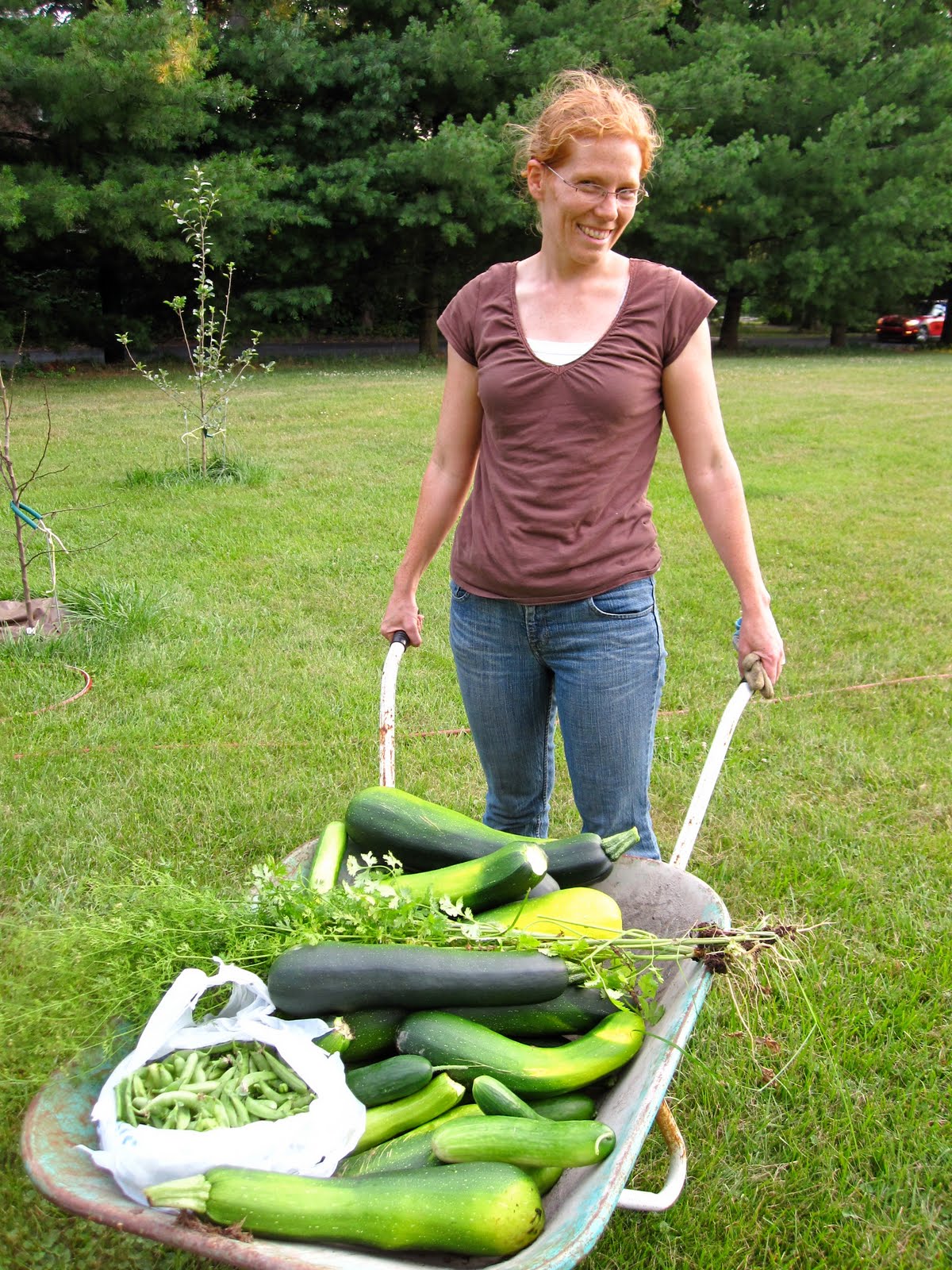
I should mention before wrapping up that all four of the kids behaved surprisingly well on both plane rides, helped immeasurably by Delta's personalized television screens. The trip back was tiring but mostly painless, and our arrival at home was met with gigantic vegetables.
I cannot stress enough how wonderful it was to see everyone. Like our garden, it pleases me more and more to see how the little family our parents started continues to bear fruit.
Subscribe to:
Posts (Atom)